
Exploring the Role of Drones in Vineyard Pest Control
Texas Agridrone Services, LLC
Discover how drones are transforming vineyard pest control with precision, efficiency, and sustainability, revolutionizing the way vineyards manage pests and diseases.
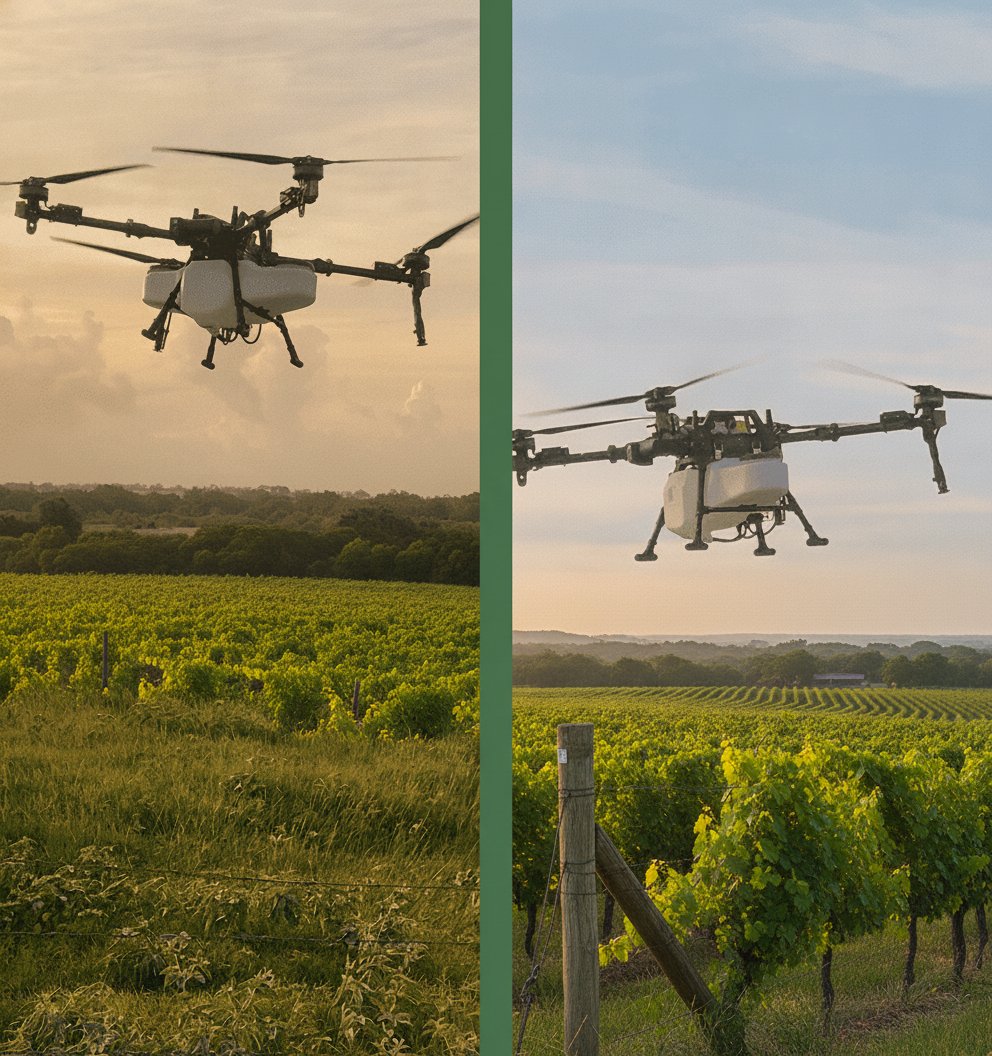
Introduction to Drones in Vineyard Pest Control
In the world of viticulture, managing pests and diseases effectively is crucial to maintaining the health and productivity of vineyards. Traditionally, this has involved labor-intensive methods that can be both costly and environmentally taxing. However, the advent of drone technology is transforming vineyard pest control, offering a more precise, efficient, and sustainable approach.
Drones provide a bird’s-eye view of vineyards, enabling accurate monitoring and targeted application of treatments. This technology not only reduces the labor requirements but also minimizes the environmental impact by ensuring that only the necessary areas are treated.
- Reduced labor costs and time
- Minimized chemical usage and environmental impact
- Enhanced precision in pest control
How Drones Enhance Precision in Vineyards
The precision offered by drones in vineyard pest control lies in their ability to map and analyze vineyard health with high accuracy. Equipped with advanced sensors and imaging technology, drones can assess plant health, identify pest hotspots, and monitor disease progression.
This data-driven approach allows vineyard managers to apply pest control measures more effectively, targeting only the affected areas and thus preserving the health of the entire vineyard. Such precision leads to better crop outcomes and can significantly improve yield quality.
- Accurate mapping and monitoring
- Targeted application of pest control measures
- Improved crop health and yield quality
Benefits of Using Drones for Vineyard Pest Management
Utilizing drones for pest management in vineyards offers numerous benefits that enhance operational efficiency. Drones can cover large areas quickly, reducing the time needed for comprehensive pest control operations. Additionally, their ability to access difficult terrains and provide real-time data makes them invaluable tools in modern viticulture.
Moreover, drones help in reducing the environmental footprint of pest control activities. By applying treatments only where necessary, they reduce chemical runoff and soil contamination, promoting a healthier ecosystem within the vineyard.
- Quick coverage of large vineyard areas
- Real-time data collection and analysis
- Reduced environmental footprint
Case Study: Successful Drone Pest Control in Vineyards
Several vineyards have already implemented drone technology with remarkable success. For instance, a vineyard in South Texas reported a 20% increase in yield quality after deploying drones for targeted pest control. The drones’ ability to identify and treat pest-infested areas promptly helped maintain the overall health of the vineyard.
Such success stories underscore the potential of drones to revolutionize pest management in viticulture, offering a sustainable and economically viable solution for vineyard owners.
- 20% increase in yield quality
- Prompt treatment of pest-infested areas
- Sustainable and economically viable solution
Frequently Asked Questions
How do drones improve pest control in vineyards?
Drones improve pest control by providing precise application of treatments only where needed, reducing chemical usage and enhancing vineyard health.
Are drones cost-effective for vineyard pest management?
Yes, drones are cost-effective as they reduce labor costs, minimize chemical use, and improve crop health, leading to better yields.
Transform Your Vineyard with Drone Technology
Ready to enhance your vineyard’s pest management with precision drone technology? Contact Texas Agridrone Services today to learn how we can help optimize your vineyard operations.