
Drone Innovations in Soil and Water Management
Texas Agridrone Services, LLC
Explore how drone technology is revolutionizing soil and water management in agriculture. Learn about innovative applications, benefits, and the future potential of drones in sustainable farming practices.
Introduction to Drone Technology in Agriculture
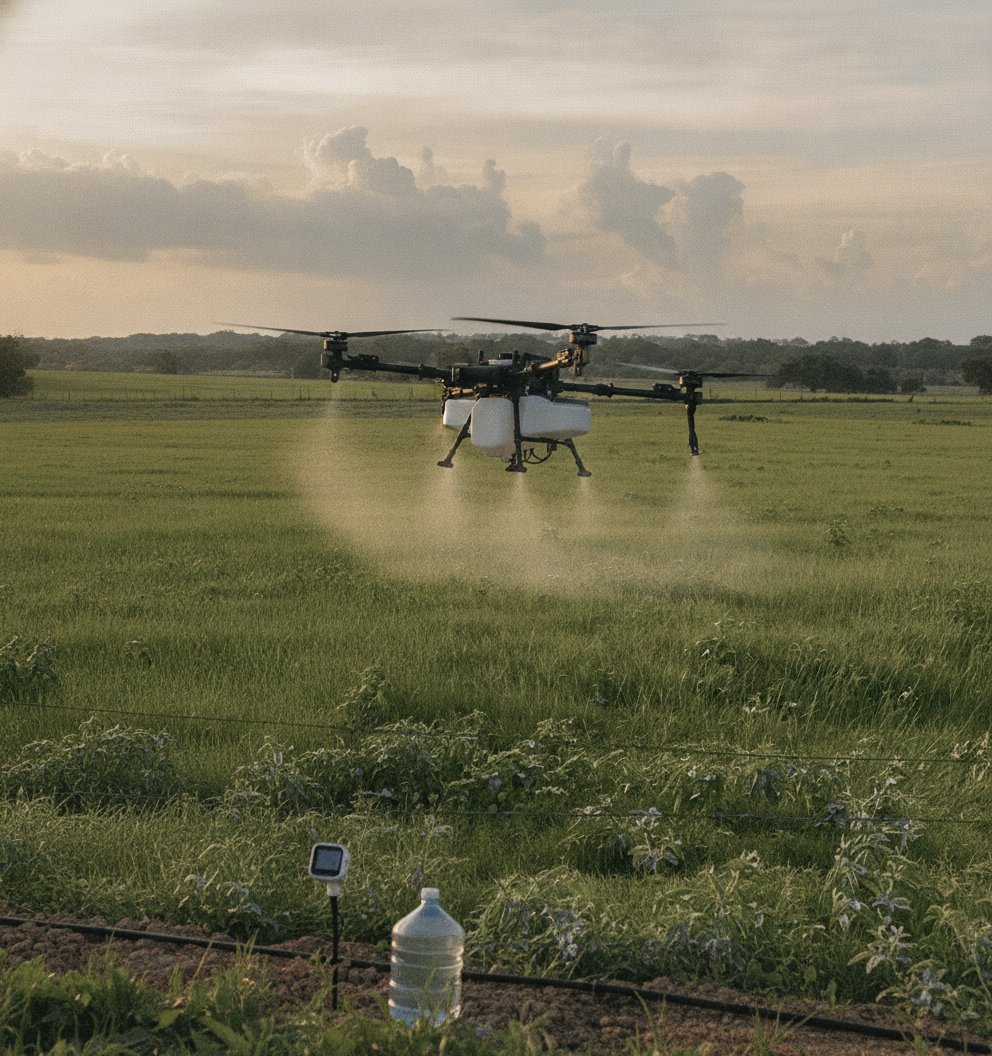
The advent of drone technology has significantly transformed agricultural practices, offering innovative solutions for soil and water management. These unmanned aerial vehicles provide farmers with precise data collection, enabling more informed decision-making and efficient resource management.
Drone technology in agriculture is not only about crop monitoring or pest control but extends to enhancing soil health and optimizing water usage. By leveraging drones, farmers can achieve sustainable farming practices, ensuring long-term productivity and ecological balance.
- Enhanced precision in soil and water management
- Sustainable farming practices
- Efficient resource management through data collection
Innovative Applications of Drones in Soil Management
Drones equipped with advanced sensors can perform detailed soil analysis, providing insights into soil health, moisture levels, and nutrient distribution. This data enables farmers to apply fertilizers and water precisely where needed, reducing waste and enhancing crop yields.
Soil erosion is a significant challenge in agriculture, leading to decreased land productivity. Drones facilitate the monitoring of erosion-prone areas and contribute to effective soil conservation strategies, ensuring sustainable land use.
- Soil health and moisture level analysis
- Precise fertilizer and water application
- Monitoring and preventing soil erosion
Water Management and Conservation Using Drones
Effective water management is crucial for sustainable agriculture, especially in areas prone to drought. Drones play a vital role in monitoring water distribution and identifying areas of inefficiency. By providing real-time data, drones help in optimizing irrigation schedules and conserving water resources.
Drones can also detect leaks in irrigation systems and uneven water distribution, allowing for timely repairs and adjustments. This capability ensures that water is used efficiently, reducing wastage and promoting environmental sustainability.
- Real-time water distribution monitoring
- Leak detection in irrigation systems
- Optimized irrigation schedules
The Future of Drones in Sustainable Agricultural Practices
As technology continues to advance, the role of drones in agriculture will only expand. Future innovations may include even more sophisticated sensors and AI-driven analytics, providing farmers with deeper insights into their soil and water management practices.
The integration of drones with other smart farming technologies, such as IoT devices and satellite imagery, will further enhance the precision and efficiency of agricultural practices. This holistic approach to farming promises a sustainable future for agriculture.
- Advanced sensors and AI-driven analytics
- Integration with IoT and satellite technologies
- Holistic and sustainable farming practices
Frequently Asked Questions
How do drones help in soil management?
Drones equipped with sensors can analyze soil health, moisture levels, and nutrient distribution, allowing precise application of resources and monitoring of erosion-prone areas.
Can drones improve water management in agriculture?
Yes, drones can monitor water distribution, detect leaks in irrigation systems, and help optimize irrigation schedules, leading to efficient water use and conservation.
Explore the Future of Agriculture with Drones
Discover how drone technology can transform your farming practices by enhancing soil and water management. Contact us for a consultation and see how our services can benefit your agricultural operations.